
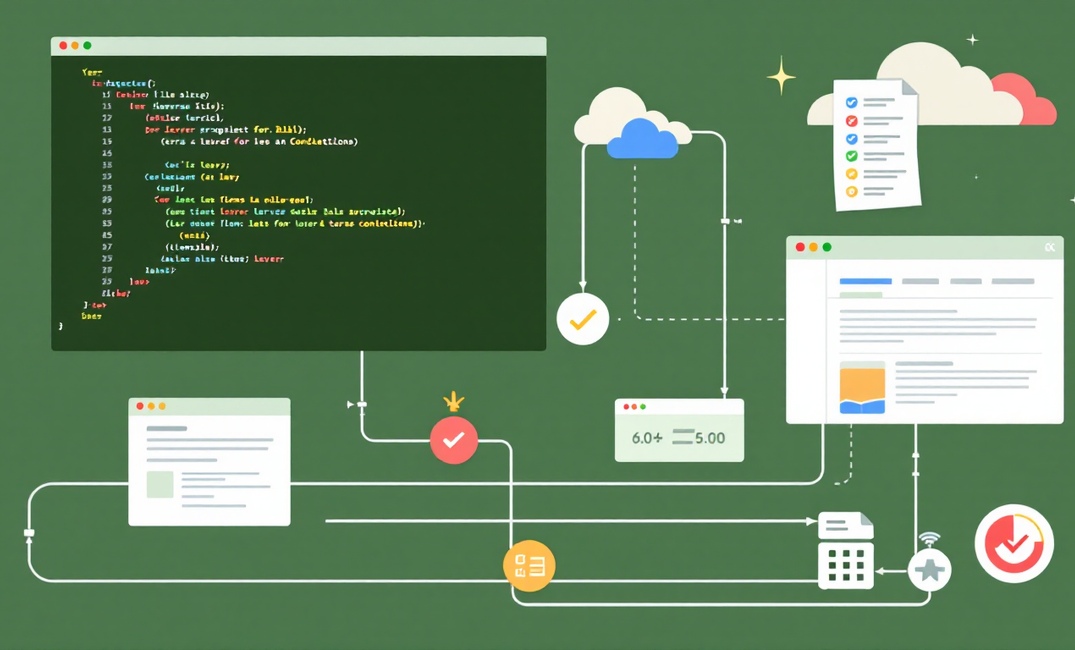
Ever wondered how Django apps effortlessly enforce rules, like authentication checks, security headers, or request validation, before your views even run?
That invisible layer of protection and logic is powered by Django middleware, one of the framework’s most powerful yet underestimated features.
Middleware acts as the gatekeeper of your application, processing every incoming request and outgoing response. In production environments, this becomes essential for enforcing security, shaping user access, and applying global logic that must never be bypassed.
In this article, we’ll explore why middleware matters by walking through a real-world example: forcing users to accept the latest Terms & Conditions before they can access your app. This is a common requirement in SaaS products, and middleware is the perfect tool to implement it cleanly, safely, and consistently.
What Is Django Middleware?
Django middleware is a lightweight, powerful system that sits between the incoming request and the outgoing response, a central layer that lets you hook into Django’s request/response lifecycle without cluttering your view logic.
Every time a user visits your site, their request flows through a stack of middleware components, each one having the opportunity to inspect, modify, block, or enhance the interaction.
Core Responsibilities of Middleware
Middleware is designed to handle cross-cutting concerns, logic that applies across your entire application, not just a single view. Its main responsibilities include:
- Request filtering: Inspect or modify requests before they reach your views.
- Response modification: Add or alter headers, cookies, or content before the response reaches the browser.
- Security enforcement: Ensure that every request obeys your security policies.
- Session/user processing: Attach session data or user information to each request so views can use it safely and consistently.
Common Built-In Middleware
Django ships with many middlewares that developers rely on every day, such as:
- SecurityMiddleware – Adds important security headers (XSS Protection, HSTS, etc.).
- AuthenticationMiddleware – Associates users with requests.
- SessionMiddleware – Handles session data across requests.
- CSRFViewMiddleware – Protects against Cross-Site Request Forgery.
- CommonMiddleware – Handles URL rewriting, content length headers, and more.
- XFrameOptionsMiddleware – Prevents clickjacking.
Together, these components form a powerful pipeline that ensures your Django application remains secure, consistent, and maintainable, while giving you the flexibility to add your own custom logic exactly where it belongs.
And if you’re looking to take your deployment skills further, check out the detailed guide “Django Deployment Simplified: Leveraging the Power of Dokku” which walks you through deploying Django apps with ease.
Why Middleware Matters in Real-World Applications
In real-world Django projects, especially those running in production, middleware becomes indispensable. It allows you to enforce application-wide behaviour from a single, centralized place, ensuring consistency and reducing the risk of human error across multiple views or apps.
Centralized Handling of Cross-Cutting Logic
Many application rules don’t belong to any one view but must apply everywhere. Instead of scattering logic throughout different parts of your codebase, middleware lets you define it once and trust it to run on every request.
Avoids Duplicated Checks Inside Views
Without middleware, developers often fall into the trap of repeating the same checks in multiple views, authentication checks, access rules, compliance guards, and more. This duplication leads to bloated views, missed edge cases, and hard-to-find bugs. Middleware eliminates this repeat work by enforcing rules before a view is even called.
Ensures Legal, Security, and Compliance Rules Are Applied Everywhere
For requirements like updated Terms & Conditions acceptance, GDPR obligations, age restrictions, or regional access limits, middleware is the safest option. Since it runs on every request, it guarantees that no user can bypass these rules by navigating to an unguarded view or API endpoint.
Improves Maintainability and Scalability
As your project grows, more routes, more features, more developers, middleware helps keep your codebase clean and maintainable. When a global rule changes, you update one middleware component instead of refactoring dozens of views. This structure makes your application easier to scale, easier to test, and far more predictable.
Middleware isn’t just a convenience, it’s a foundation for building robust, consistent, and production-ready Django applications.
And if you want to sharpen your Python skills even further, grab my free Master Python One-Liners cheat sheet, a downloadable PDF packed with elegant list/dict comprehensions, clever string tricks, functional one-liners, file I/O shortcuts, and pro tips for writing cleaner, more Pythonic code.
Real-World Example: Enforcing Terms & Conditions Acceptance via Middleware
The Scenario
Imagine you're building a SaaS platform where legal compliance is non-negotiable. Every time your company updates its Terms & Conditions, all users must accept the latest version before they can continue using the app. Failing to enforce this consistently could expose the business to legal and security risks.
Here’s the challenge:
- Every authenticated user must have accepted the most recent Terms & Conditions, which you track using a version number (e.g.,
CURRENT_TERMS_VERSION). - If a user’s accepted version is outdated, they should be immediately redirected to a dedicated T&C acceptance page, before they can access any other part of the application.
- At the same time, the system must not interfere with functionality that should remain accessible, such as:
- Login and logout routes
- The Terms & Conditions page itself
- Static and media files
- Admin login page
This is exactly the type of global, must-not-be-bypassed rule that middleware handles elegantly. Instead of adding checks to dozens of views, you implement a single piece of middleware that inspects every request and ensures users stay compliant, automatically, consistently, and securely.
Why Middleware Is the Perfect Fit
Middleware is the ideal solution for enforcing Terms & Conditions acceptance because it operates before any view logic runs. This guarantees that users who haven’t accepted the latest T&C can never reach protected areas of your application, regardless of which URLs they try to access.
Here’s why middleware is the perfect fit:
- Enforces rules before views run: The check happens at the earliest possible stage of the request pipeline. No view, template, or business logic executes until the middleware approves the request.
- Central place for redirect logic: Instead of sprinkling conditional checks across dozens of views, middleware consolidates the logic into a single, clean, maintainable component.
- Prevents accidental bypass: As your project grows, new routes and features are added. Middleware ensures that T&C enforcement is automatically applied, even if a developer forgets to add a check to a new view.
- Enables structured allow-list logic for safe URLs: Certain paths, like login, logout, static files, and the T&C acceptance page, must remain accessible. Middleware provides a clear, centralized place to define an allow-list, ensuring the app remains usable while still fully compliant.
Overall, middleware delivers the reliability, predictability, and scalability needed for enforcing high-stakes rules like T&C acceptance across a production Django application.
Implementation: Middleware Code
Below is an example of a Django middleware class that enforces Terms & Conditions acceptance. Full source code available at the end of this section.
It checks whether an authenticated user has accepted the latest version, compares it with CURRENT_TERMS_VERSION, skips allowed paths, and redirects non-compliant users.
This article is for paid members only
To continue reading this article, upgrade your account to get full access.
Subscribe NowAlready have an account? Sign In